Formula Template
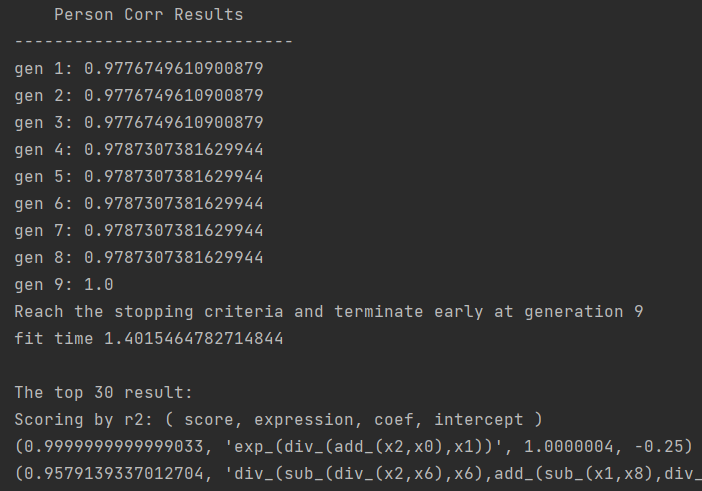
Add user-preferential formula template restriction could accelerate the computation.
Parameter sci_template could be "default", None, or user-defined template (type: list).
"default": We built-in some formula templates. Such as \(y = exp(? / ?)\) .None: Not use template.User-defined template (type: list): consult the author for details.
For target problem:
\(y = exp((X_0+X_2)/X_1)\)
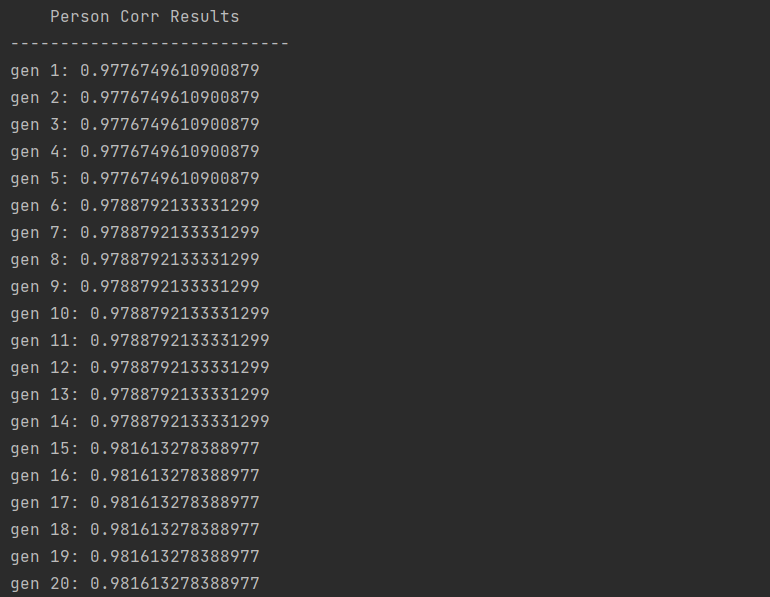
The "default" would be far faster than None to find the target expression, It is natural.
Test Code:
>>> import numpy as np
>>> from fastgplearn.skflow import SymbolicRegressor
>>> np.random.seed(0)
>>> x = np.random.random(size=(100, 10))
>>> x = x + 1
>>> x[:, 0] = 5*x[:, 0]
>>> x[:, 2] = 5*x[:, 2]
>>> y = np.random.random(size=100) * 0.01 + np.exp((x[:, 0]+x[:, 2]) / x[:, 1],)
>>> x = x.astype(np.float32)
>>> y = y.astype(np.float32)
With template:
>>> sr1 = SymbolicRegressor(population_size=10000, generations=30, stopping_criteria=1.0,
>>>                         constant_range=(0, 1.0), depth=(2, 4),
>>>                         function_set=('add', 'sub', 'mul', 'div',"exp"),random_state=0,
>>>                         sci_template="default")
>>>                         # sci_template=None)
>>> sr1.fit(x, y)
>>> sr1.top_n(30)
Without template:
>>> sr2 = SymbolicRegressor(population_size=10000, generations=30, stopping_criteria=1.0,
>>>                         constant_range=(0, 1.0), depth=(2, 4),
>>>                         function_set=('add', 'sub', 'mul', 'div',"exp"),random_state=0,
>>>                         #sci_template="default")
>>>                         sci_template=None)
>>> sr2.fit(x, y)
>>> sr2.top_n(30)